How to Prepare for the Civil Services Examination: A Complete Guide for Aspirants
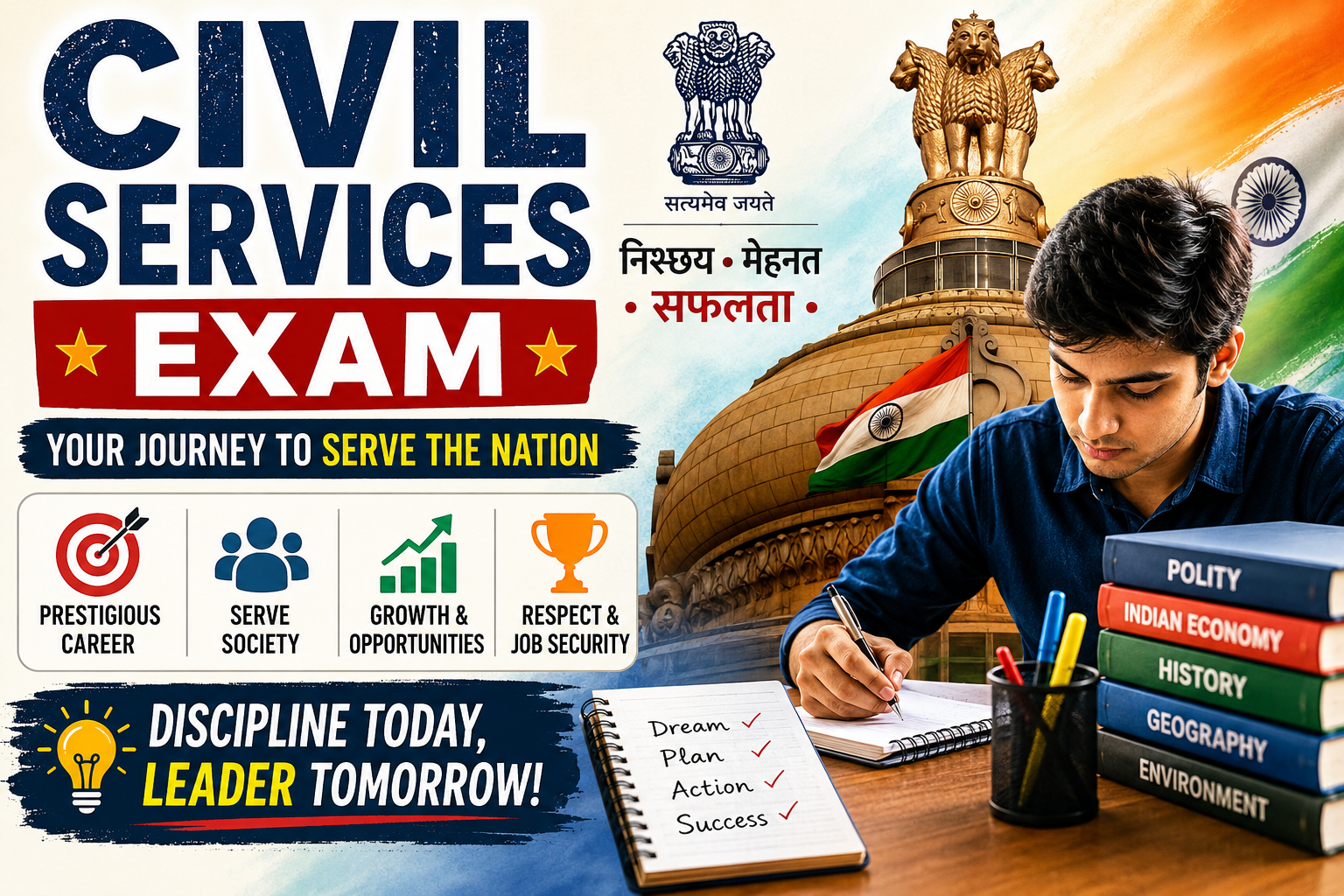
The Civil Services Examination conducted by the Union Public Service Commission is considered one of the toughest and most respected competitive exams in India. Every year, lakhs of students dream of becoming an IAS, IPS, IFS, or IRS officer, but only a few succeed.
Success in this examination does not depend only on intelligence. It depends more on consistency, discipline, smart strategy, and patience. Many aspirants fail not because they lack capability, but because they follow the wrong approach.
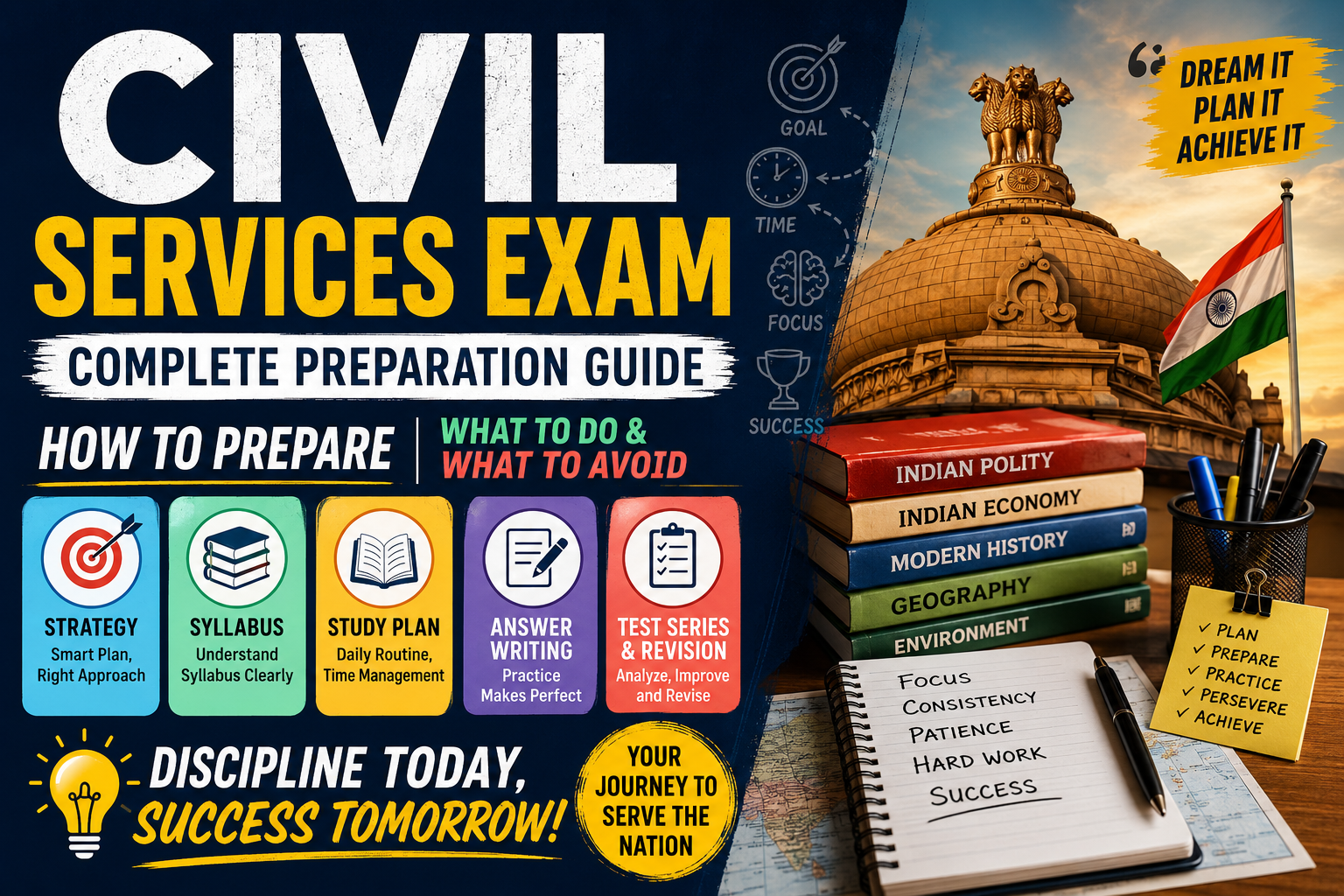
This blog explains how to prepare effectively for the Civil Services Examination, what to do during preparation, and what mistakes to avoid.
Understanding the Exam Structure
Before starting preparation, every aspirant must clearly understand the structure of the examination.
The exam has three stages:
1. Preliminary Examination
This is the screening stage consisting of:
- General Studies Paper I
- CSAT Paper
The objective is to test basic awareness, analytical ability, and aptitude.
2. Main Examination
The Mains examination is descriptive and tests:
- Conceptual understanding
- Analytical thinking
- Writing ability
- Opinion formation
- Presentation skills
This stage is the most important because marks obtained here directly affect the final ranking.
3. Personality Test (Interview)
The interview checks:
- Confidence
- Decision-making ability
- Communication skills
- Personality traits
- Administrative attitude
It is not just a knowledge test; it is a personality assessment.
How to Start Preparation
Understand the Syllabus Properly
The biggest mistake beginners make is studying randomly without understanding the syllabus.
Print the syllabus and keep it near your study table. Every topic you study should be linked directly to the syllabus.
Aspirants who know the syllabus well can:
- Avoid unnecessary study material
- Save time
- Focus on important topics
Build Strong Basics First
NCERT books are the foundation of Civil Services preparation.
Start with subjects like:
- History
- Geography
- Polity
- Economics
- Science
- Environment
Strong basics help in both Prelims and Mains.
Read Newspapers Daily
Current affairs play a major role in the examination.
Reading newspapers daily improves:
- Awareness
- Analytical thinking
- Vocabulary
- Opinion-building skills
Focus mainly on:
- Government policies
- International relations
- Economy
- Environment
- Supreme Court judgments
- Social issues
Avoid spending too much time on political controversies or entertainment news.
Make Short Notes
Preparation becomes difficult without revision.
Create short notes for:
- Important facts
- Current affairs
- Government schemes
- Reports and indices
- Important judgments
Short notes help during last-minute revision before exams.
Practice Answer Writing
Many students study a lot but fail to express their knowledge in the examination hall.
Answer writing is extremely important for Mains preparation.
Practice:
- Structured answers
- Introduction and conclusion writing
- Time management
- Balanced viewpoints
Good presentation can increase marks significantly.
Importance of Mock Tests
Mock tests help aspirants:
- Improve speed
- Identify weak areas
- Reduce exam fear
- Learn time management
Giving regular tests is essential for both Prelims and Mains.
Time Management Strategy
Civil Services preparation is a long journey. Proper time management is necessary.
A balanced daily schedule should include:
- Static subjects
- Current affairs
- Revision
- Mock tests
- Writing practice
Consistency matters more than studying for 15 hours one day and doing nothing the next day.
What Aspirants Should Do
Maintain Consistency
Study regularly every day, even if for fewer hours.
Revise Multiple Times
Revision is the key to retention.
Without revision, most information gets forgotten quickly.
Analyze Previous Year Questions
Previous year papers help understand:
- UPSC trends
- Important topics
- Question framing style
- Difficulty level
Focus on Conceptual Clarity
UPSC does not reward rote learning.
Understanding concepts deeply is more important than memorizing facts.
Stay Mentally Strong
Preparation can become stressful.
Maintain:
- Positive thinking
- Physical fitness
- Healthy routine
- Proper sleep
Mental stability is extremely important during preparation.
What Aspirants Should Avoid
Avoid Too Many Resources
Using too many books creates confusion.
Limited resources with multiple revisions are more effective.
Avoid Constant Comparison
Every aspirant has a different journey and learning speed.
Comparing yourself with others creates unnecessary pressure.
Avoid Social Media Distractions
Excessive scrolling wastes valuable preparation time.
Use the internet only for productive learning.
Avoid Ignoring CSAT
Many aspirants focus only on General Studies and ignore CSAT, which can become risky.
Practice aptitude and comprehension regularly.
Avoid Burnout
Studying continuously without breaks reduces productivity.
Take short breaks and maintain balance.
Role of Discipline in Success
Civil Services preparation is not about motivation every day.
It is about:
- Discipline
- Patience
- Self-control
- Long-term consistency
Even average students can clear the examination with proper strategy and dedication.
Final Thoughts
The Civil Services Examination is more than just a competitive exam. It is a journey that transforms individuals into disciplined, informed, and responsible citizens.
Success may take time, but with:
- Proper planning
- Smart preparation
- Regular revision
- Answer writing practice
- Consistency
the goal becomes achievable.
Remember, the examination is not testing how many books you have read — it is testing how well you understand, analyze, and present your knowledge under pressure.
Stay focused, trust the process, and keep moving forward.