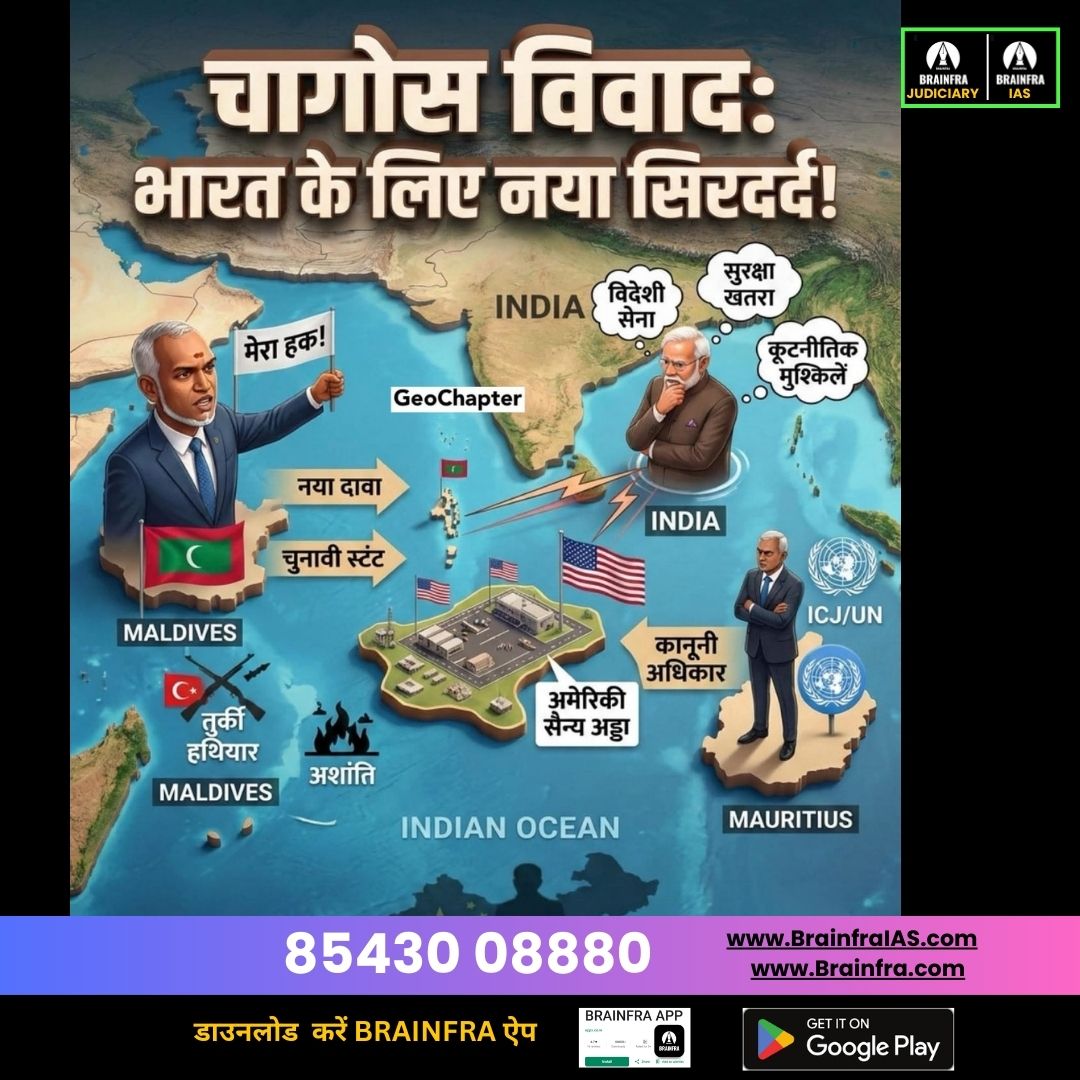
“हिंद महासागर की भू-राजनीति भारत की विदेश नीति की प्राथमिकताओं को पुनर्परिभाषित कर रही है।” चागोस विवाद के संदर्भ में चर्चा कीजिए।
चागोस द्वीपसमूह विवाद, जिसमें मॉरीशस, यूनाइटेड किंगडम तथा संयुक्त राज्य अमेरिका शामिल हैं, हिंद महासागर क्षेत्र (IOR) का एक महत्वपूर्ण भू-राजनीतिक मुद्दा बन चुका है। अंतरराष्ट्रीय न्यायालय (ICJ) ने 2019 में अपने सलाहकारी मत में कहा कि ब्रिटेन द्वारा चागोस पर प्रशासन जारी रखना अवैध है और इसे मॉरीशस को लौटाया जाना चाहिए। किंतु डिएगो गार्सिया में अमेरिकी सैन्य अड्डे की रणनीतिक उपस्थिति इस विवाद को जटिल बना देती है।
भारत के लिए हिंद महासागर समुद्री सुरक्षा तथा आर्थिक हितों का केंद्र है। भारत का लगभग 90% व्यापार मात्रा के आधार पर समुद्री मार्गों से होता है। क्षेत्र में अस्थिरता ऊर्जा सुरक्षा और आपूर्ति शृंखला को प्रभावित कर सकती है। यह विवाद उपनिवेशवाद-उन्मूलन के सिद्धांत और सामरिक सुरक्षा आवश्यकताओं के बीच टकराव को भी दर्शाता है।
भारत की विदेश नीति तीन प्रमुख कारकों से प्रभावित हो रही है:
प्रथम, नियम-आधारित अंतरराष्ट्रीय व्यवस्था और उपनिवेशवाद-उन्मूलन के समर्थन की प्रतिबद्धता, जिससे भारत मॉरीशस तथा वैश्विक दक्षिण के देशों के साथ खड़ा दिखता है।
द्वितीय, अमेरिका के साथ रणनीतिक साझेदारी, विशेषकर QUAD जैसे मंचों के माध्यम से, जो भारत की इंडो-पैसिफिक नीति को सुदृढ़ करती है।
तृतीय, ‘सागर’ (Security and Growth for All in the Region) सिद्धांत, जो क्षेत्रीय समुद्री सहयोग और स्थिरता पर बल देता है।
अतः चागोस विवाद यह दर्शाता है कि भारत को कानूनी मूल्यों और सामरिक यथार्थ के बीच संतुलन स्थापित करना होगा। हिंद महासागर की भू-राजनीति भारत को संतुलित कूटनीति, समुद्री क्षमता-विस्तार और रणनीतिक स्वायत्तता की दिशा में अग्रसर कर रही है।
“Indian Ocean geopolitics is redefining India’s foreign policy priorities.” Discuss in the context of the Chagos dispute. The Chagos Archipelago dispute, involving Mauritius, the United Kingdom, and the United States, has emerged as a significant geopolitical issue in the Indian Ocean Region (IOR). The International Court of Justice (ICJ) in its advisory opinion (2019) held that the UK’s continued administration of Chagos is unlawful and called for its return to Mauritius. However, the strategic presence of the US military base at Diego Garcia adds complexity to the issue. For India, the IOR is central to its maritime security and economic interests. Nearly 90% of India’s trade by volume passes through sea routes in this region. Any instability may impact energy security and supply chains. The dispute highlights the tension between principles of decolonization and strategic security imperatives. India’s foreign policy is increasingly shaped by three factors: First, commitment to a rules-based international order and support for decolonization, aligning India with Mauritius and Global South concerns. Second, strategic partnerships, particularly with the United States under frameworks like QUAD, which strengthen India’s Indo-Pacific posture. Third, the SAGAR (Security and Growth for All in the Region) doctrine, emphasizing maritime cooperation and regional stability. Thus, the Chagos issue underscores India’s need to balance legal norms with strategic realities. Indian Ocean geopolitics is pushing India toward calibrated diplomacy, maritime capability enhancement, and strategic autonomy to safeguard its long-term interests.
#ChagosDispute #IndianOcean #UPSC2026 #InternationalRelations #GS2 #MaritimeSecurity #StrategicAutonomy #IndoPacific #UPSCPreparation