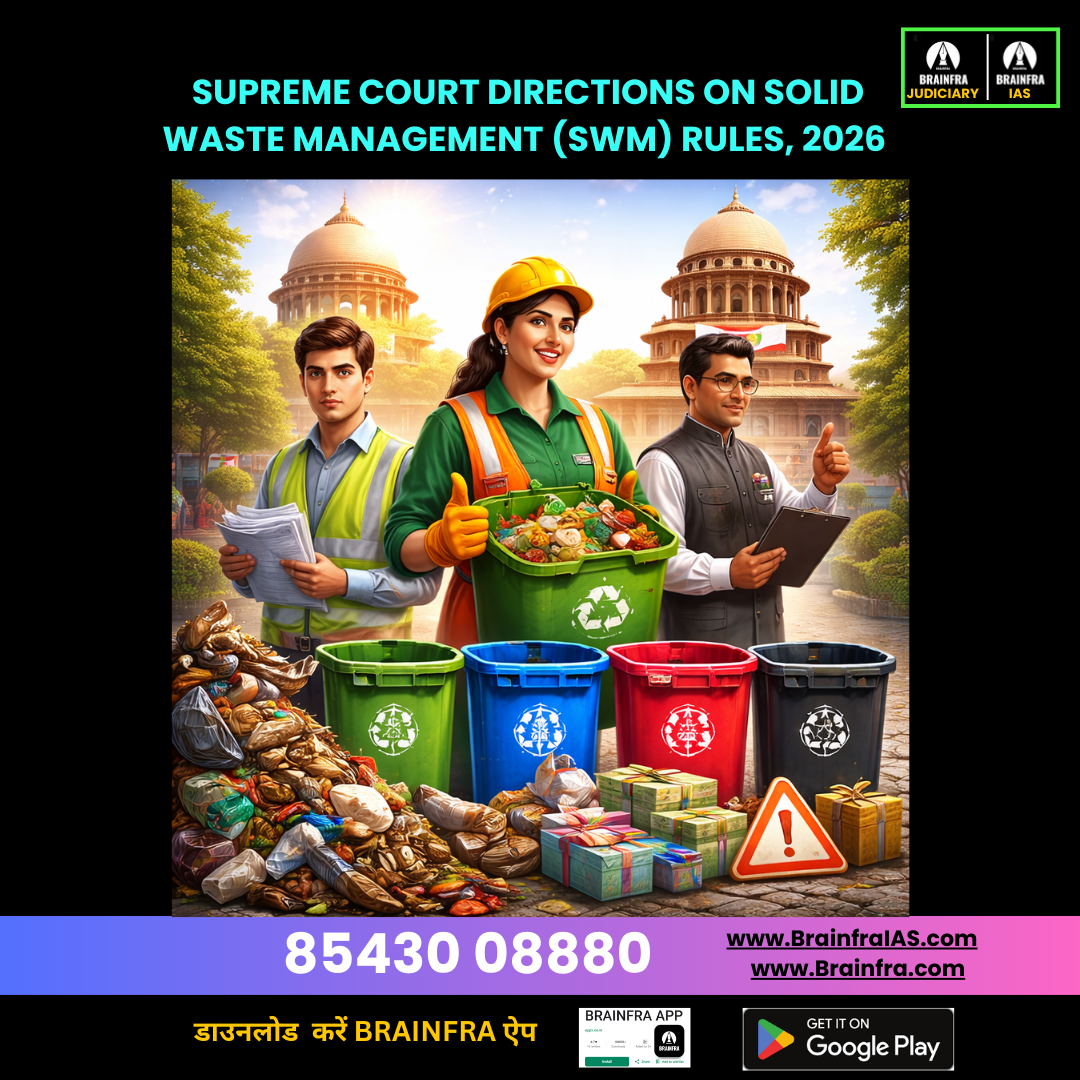
सुप्रीम कोर्ट के निर्देश: सॉलिड वेस्ट मैनेजमेंट (SWM) नियम, 2026 ⚖️🚨
सुप्रीम कोर्ट ने 1 अप्रैल 2026 से लागू होने वाले सॉलिड वेस्ट मैनेजमेंट नियम, 2026 को प्रभावी ढंग से लागू कराने हेतु व्यापक दिशा-निर्देश जारी किए हैं।
न्यायालय ने पुनः स्पष्ट किया कि स्वच्छ और स्वस्थ पर्यावरण का अधिकार, अनुच्छेद 21 (जीवन का अधिकार) का अभिन्न हिस्सा है।
अदालत ने यह भी कहा कि भारत की 2000 वर्ष पुरानी विरासत स्थलों के बावजूद, खराब कचरा प्रबंधन और गंदगी पर्यटन को हतोत्साहित करती है।
🔹 प्रमुख निर्देश
1️⃣ चार-स्तरीय कचरा पृथक्करण
• गीला कचरा
• सूखा कचरा
• सेनेटरी कचरा
• विशेष श्रेणी कचरा
प्रदूषण नियंत्रण बोर्डों को आवश्यक अधोसंरचना विकसित करने और Bulk Waste Generators को तुरंत नियमों की सूचना देने का निर्देश।
2️⃣ जनप्रतिनिधियों की जिम्मेदारी
पार्षद, महापौर, कॉरपोरेटर, वार्ड सदस्य को स्रोत स्तर पर कचरा पृथक्करण हेतु जन-जागरूकता का नेतृत्व करना होगा।
यह उनका वैधानिक दायित्व है।
3️⃣ सख्त दंड प्रणाली (Three-Tier System)
🔹 प्रथम स्तर – तत्काल जुर्माना
🔹 द्वितीय स्तर – पर्यावरण कानूनों के तहत आपराधिक मुकदमा
🔹 तृतीय स्तर – जिम्मेदार अधिकारियों पर भी अभियोजन
अब नियमों की अनदेखी को मात्र प्रशासनिक त्रुटि नहीं माना जाएगा।
4️⃣ पुराने कचरा ढेर (Legacy Waste)
समयबद्ध कार्य योजना बनाकर डंपसाइट्स का उपचार और पुनर्स्थापन अनिवार्य।
5️⃣ पर्यावरण संरक्षण अधिनियम, 1986 के तहत निर्देश
• जिला कलेक्टर द्वारा अधोसंरचना ऑडिट
• सभी स्थानीय निकाय 100% अनुपालन की अंतिम समयसीमा घोषित करें
🎯 UPSC दृष्टिकोण
✔ अनुच्छेद 21 का विस्तार
✔ पर्यावरणीय न्यायशास्त्र
✔ शहरी शासन सुधार
✔ जवाबदेही और सुशासन
✔ SDG 11 एवं 12
📌 यह विषय GS-2 (संविधान व शासन) तथा GS-3 (पर्यावरण) दोनों के लिए अत्यंत महत्वपूर्ण है।
#UPSC #UPSCPreparation #GS2 #GS3 #Environment #SolidWasteManagement #Article21 #SupremeCourt #CleanIndia #UrbanGovernance #CurrentAffairs #Mains2026 #Prelims2026 🇮🇳
🇬🇧 English Post (For UPSC Aspirants)
🚨⚖️ Supreme Court Directions on Solid Waste Management (SWM) Rules, 2026 ⚖️🚨
The Supreme Court has issued comprehensive directions to ensure effective enforcement of the upcoming SWM Rules, 2026, which will come into effect on 1 April 2026.
The Court reiterated that the Right to a Clean and Healthy Environment is intrinsic to Article 21 (Right to Life) under the Constitution.
It observed that despite India’s ancient heritage sites, poor waste management and civic uncleanliness discourage tourism and harm the nation’s image.
🔹 Key Directions
1️⃣ Four-Stream Waste Segregation
• Wet Waste
• Dry Waste
• Sanitary Waste
• Special Care Waste
Pollution Control Boards must strengthen infrastructure and immediately communicate rules to Bulk Waste Generators (BWGs).
2️⃣ Role of Elected Representatives
Councillors, Mayors, Corporators, and Ward Members are designated as lead facilitators for source segregation awareness and are statutorily obligated to ensure citizen participation.
3️⃣ Three-Tier Enforcement Mechanism
🔹 Tier 1 – Immediate fines for non-compliance
🔹 Tier 2 – Criminal prosecution under environmental laws
🔹 Tier 3 – Prosecution of responsible officials for negligence
Non-compliance will no longer be treated as a minor administrative lapse.
4️⃣ Legacy Waste Management
A separate time-bound action plan must address and remediate existing dumpsites.
5️⃣ Directions Under Environment Protection Act, 1986
• District Collectors to conduct infrastructure audits
• Local bodies must declare a deadline for 100% compliance
🎯 UPSC Relevance
✔ Expansion of Article 21 jurisprudence
✔ Environmental Rule of Law
✔ Urban Governance & Accountability
✔ Sustainable Development Goals (SDG 11 & 12)
📌 Important for GS-II (Polity & Governance) and GS-III (Environment).
#UPSC2026 #UPSCPreparation #GS2 #GS3 #Environment #SWMRules2026 #Article21 #SupremeCourt #UrbanGovernance #SustainableDevelopment #MoEFCC #CurrentAffairs #Prelims2026 #Mains2026