Mandya Inscription Highlights Hoysala–Tamil Connections | मांड्या शिलालेख ने उजागर किए होयसला–तमिल संबंध ✨📜
Recently, an inscription engraved on a slab at the Sri Mahalakshmi Temple (Mandya, Karnataka) has provided fresh insights into the 12th century, revealing strong cultural, religious and political connections between the Hoysala rulers and Tamil regions.
हाल ही में कर्नाटक के मांड्या स्थित श्री महालक्ष्मी मंदिर में प्राप्त एक शिलालेख ने 12वीं शताब्दी के ऐतिहासिक तथ्यों को उजागर करते हुए होयसला शासकों और तमिल क्षेत्र के बीच घनिष्ठ संबंधों की पुष्टि की है।
यह खोज दक्षिण भारत के मध्यकालीन इतिहास को समझने में अत्यंत महत्वपूर्ण है।
🏛 About the Hoysala Dynasty (10th–14th Century)
🏛 होयसला वंश (10वीं–14वीं शताब्दी)
📍 Region | क्षेत्र
- Southern Deccan Plateau
- Kaveri (Cauvery) River Valley
- Present-day Karnataka and parts of Tamil Nadu
🏙 Capital | राजधानी
- Belur (initial capital)
- Later shifted to Halebidu (Dwarasamudra / Dorasamudra)
👑 Founder | संस्थापक
- Nripa Kama II (Initially a feudatory of the Western Gangas)
🏢 Administration | प्रशासनिक व्यवस्था
The kingdom was divided into:
- Nadus
- Kampanas
- Vishayas
- Deshas (in descending order)
राज्य को प्रशासनिक रूप से विभाजित किया गया था:
- नाडु
- कम्पना
- विषय
- देश
यह संरचना एक सुव्यवस्थित एवं संगठित प्रशासन का उदाहरण थी।
🌍 Sacred Ensembles of the Hoysalas (UNESCO World Heritage Site)
🌍 होयसलों के पवित्र समूह (यूनेस्को विश्व धरोहर स्थल)
The “Sacred Ensembles of the Hoysalas” in Karnataka were declared the 42nd UNESCO World Heritage Site.
इनमें शामिल हैं:
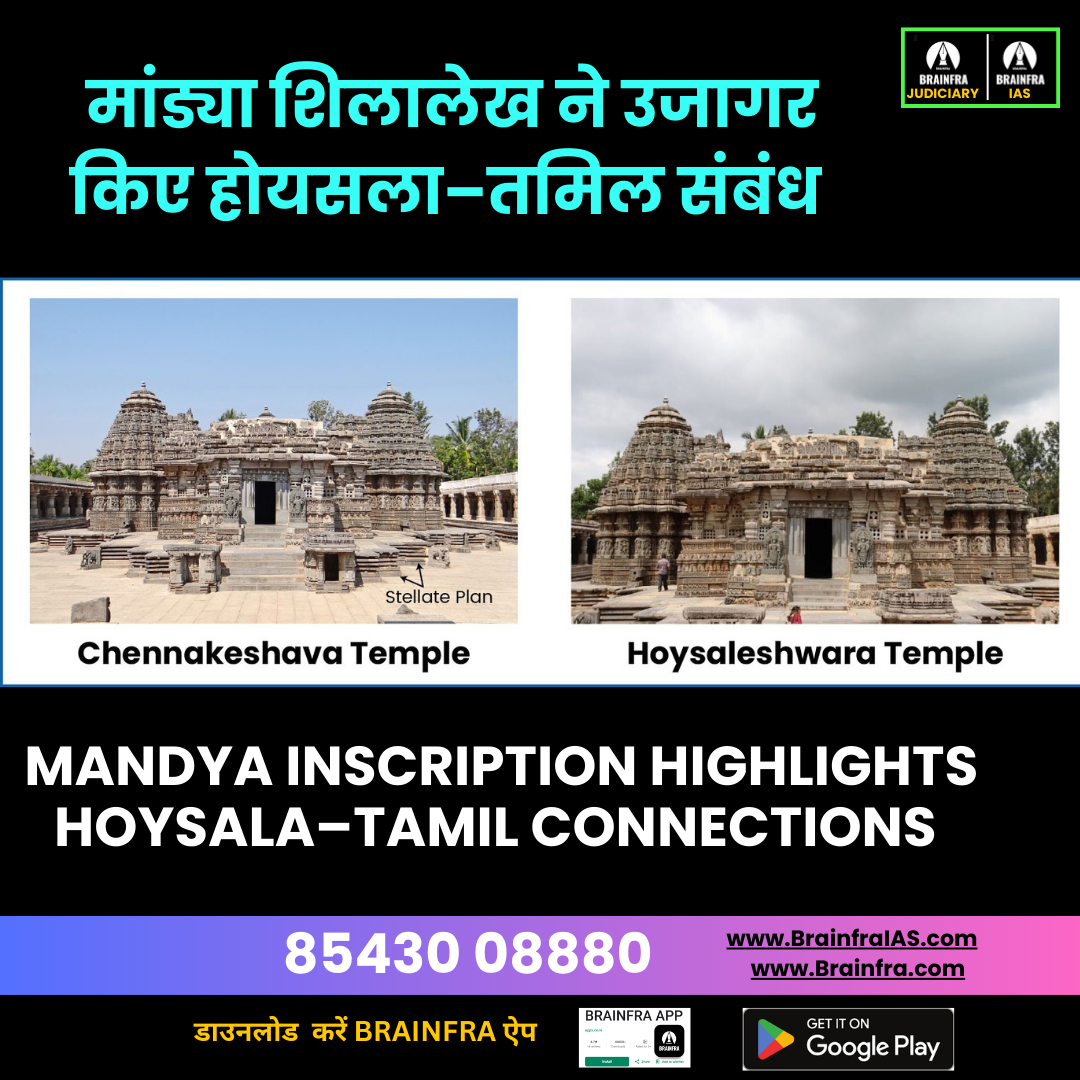
🛕 Chennakeshava Temple – Belur
🛕 Hoysaleshwara Temple – Halebidu
🛕 Keshava Temple – Somanathapura
These temples are masterpieces of Indian temple architecture.
🏗 Hoysala Architecture Style
🏗 होयसला स्थापत्य शैली
🔶 1. Vesara Style
Followed the Hybrid (Vesara) Style – a blend of Dravidian (South Indian) and Nagara (North Indian) styles.
होयसला मंदिरों में वेसर शैली अपनाई गई, जो द्रविड़ और नागर शैली का सम्मिश्रण है।
🔶 2. Influence of Bhumija Style
Show strong influence of Bhumija Shikhara (a North Indian architectural variation).
🔶 3. Stellate (Star-Shaped) Plan
Temples were built on a raised platform (Adhisthana) and often followed a stellate or star-shaped plan.
मंदिर ऊँचे चबूतरे (अधिष्ठान) पर बनाए जाते थे और उनका आधार तारे जैसा होता था।
🔶 4. Material Used
- Soapstone (Chloritic Schist)
Soft and highly suitable for detailed carvings.
सोपस्टोन का उपयोग किया गया, जो नक्काशी के लिए अत्यंत उपयुक्त है।
🔶 5. Types of Shrines | गर्भगृह के प्रकार
- 🛕 Ekakuta – Single sanctum
- 🛕 Dvikuta – Double sanctum
- 🛕 Trikuta – Triple sanctum
- 🛕 Panchakuta (Rare) – Five shrines
यह विविधता धार्मिक और स्थापत्य समृद्धि का प्रमाण है।
📜 Significance of the Mandya Inscription
📜 मांड्या शिलालेख का महत्व
✅ Strengthens evidence of Hoysala–Tamil political alliances
✅ Indicates religious patronage across regional boundaries
✅ Shows cultural integration in South India during the 12th century
✅ Highlights mobility of artisans and temple-building traditions
यह शिलालेख दक्षिण भारत की सांस्कृतिक एकता और राजनीतिक समन्वय का प्रतीक है।
🌟 Conclusion | निष्कर्ष
The Mandya inscription not only strengthens historical understanding but also highlights how medieval South India was interconnected politically, culturally and religiously.
यह खोज दर्शाती है कि दक्षिण भारत का मध्यकाल केवल क्षेत्रीय संघर्षों का इतिहास नहीं था, बल्कि सांस्कृतिक सहयोग और स्थापत्य उत्कर्ष का भी युग था।
📌 Knowledge is Power.
📚 History is the foundation of Civilization.
#HoysalaDynasty #MandyaInscription #IndianHistory #ArtAndCulture #UNESCOHeritage #TempleArchitecture #VesaraStyle #UPSCPreparation #SouthIndianHistory #Epigraphy #IndianHeritage #भारतीयइतिहास #होयसला #मंदिरस्थापत्य #UNESCO #UPSCNotes