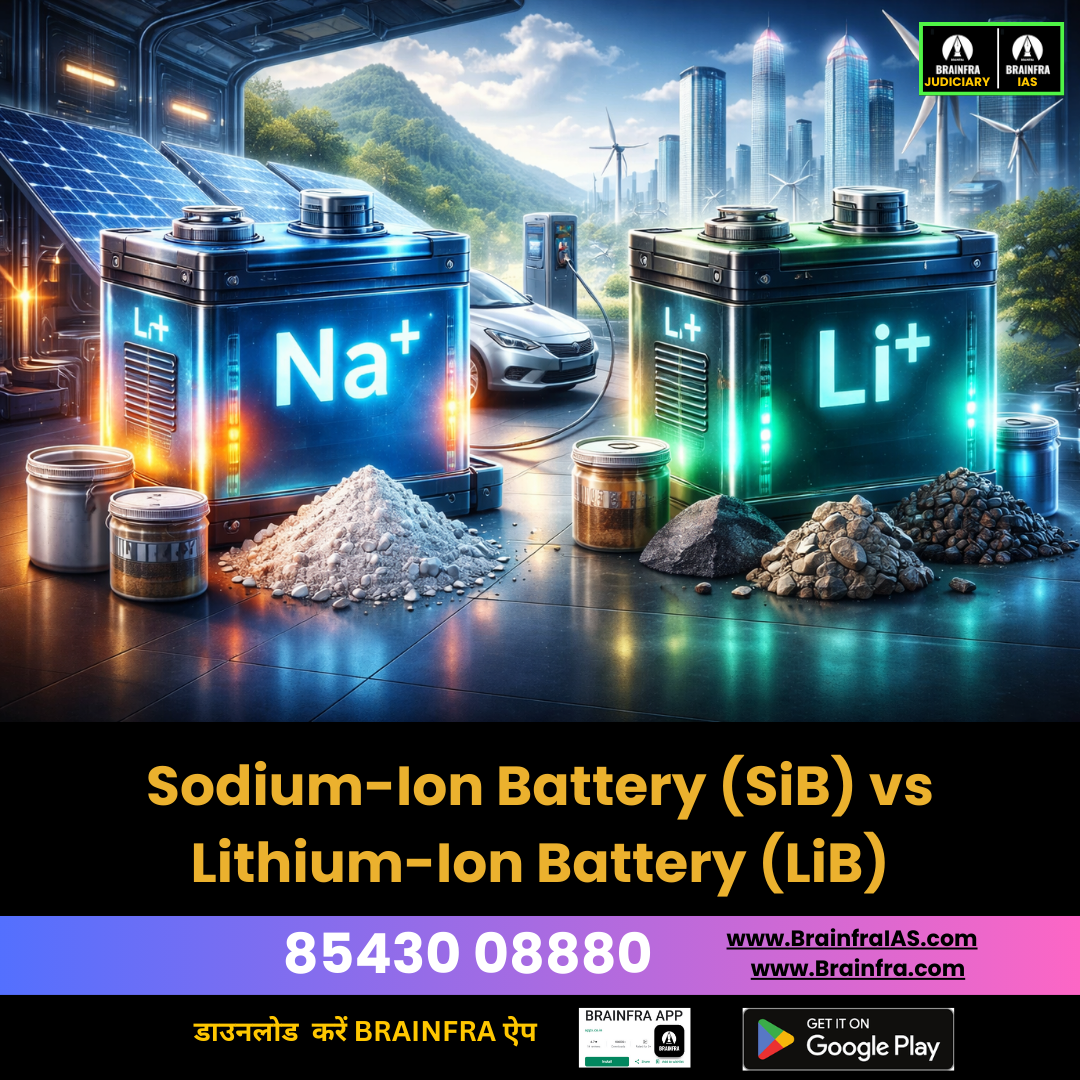
Sodium-Ion Battery (SiB) vs Lithium-Ion Battery (LiB)
Why in News?
With rising EV adoption and energy storage needs, India is exploring Sodium-ion batteries to reduce dependence on lithium and enhance energy security.
Comparison Table
1. Raw Material
Sodium-Ion: Uses abundant sodium (soda ash)
Lithium-Ion: Depends on scarce lithium, cobalt, nickel, graphite
2. Energy Density
Sodium-Ion: Slightly lower energy density
Lithium-Ion: Higher energy density
3. Safety
Sodium-Ion: Safer; lower thermal runaway, can be stored at zero volts
Lithium-Ion: Higher fire risk; classified as dangerous goods
4. Supply Chain
Sodium-Ion: Low geopolitical risk; widely available materials
Lithium-Ion: High import dependence; concentrated global supply
5. Charging Speed & Lifecycle
Sodium-Ion: Faster charging; nearly 3× higher lifecycle
Lithium-Ion: Slower charging; comparatively lower lifecycle
Significance for India
Reduces import dependence
Boosts energy security
Suitable for grid storage & low-cost EVs
खबर में क्यों?
EV और ऊर्जा भंडारण की बढ़ती जरूरतों के बीच भारत लिथियम-आयन पर निर्भरता घटाने और ऊर्जा सुरक्षा बढ़ाने के लिए सोडियम-आयन बैटरी की ओर अग्रसर है।
तुलनात्मक अध्ययन
1. कच्चा माल
सोडियम-आयन: प्रचुर मात्रा में उपलब्ध सोडियम (सोडा ऐश)
लिथियम-आयन: दुर्लभ लिथियम, कोबाल्ट, निकेल, ग्रेफाइट पर निर्भर
2. ऊर्जा घनत्व
सोडियम-आयन: अपेक्षाकृत कम
लिथियम-आयन: अधिक
3. सुरक्षा
सोडियम-आयन: अधिक सुरक्षित; कम थर्मल रनअवे, शून्य वोल्ट पर भंडारण संभव
लिथियम-आयन: आग का अधिक खतरा; खतरनाक वस्तु के रूप में वर्गीकृत
4. आपूर्ति श्रृंखला
सोडियम-आयन: कम भू-राजनीतिक जोखिम; सामग्री व्यापक रूप से उपलब्ध
लिथियम-आयन: आयात पर भारी निर्भरता; सीमित देशों में आपूर्ति
5. चार्जिंग गति व जीवनकाल
सोडियम-आयन: तेज चार्जिंग; लगभग 3 गुना अधिक जीवनकाल
लिथियम-आयन: धीमी चार्जिंग; कम जीवनकाल
भारत के लिए महत्व
आत्मनिर्भरता को बढ़ावा
ऊर्जा सुरक्षा सुदृढ़
ग्रिड स्टोरेज और सस्ते EVs के लिए उपयुक्त